Servant Heart

Growing as a Disciple • 1 Samuel 15
Following on from Last Week
Last Wednesday evening we looked at growing as disciples. We tried, as honestly as we felt able, to identify areas in our own lives where change may be needed if we are to grow.
Conversations like that can become part of a journey into increasing light. A thought emerges; we ponder it; it enters our ongoing conversation with the Lord. As Scripture speaks into it, a pathway begins to develop in our thinking. Other conversations, circumstances and promptings may then deepen what God is showing us. But each of us chooses how far we will travel along that pathway.

We can usually identify good things that would help us grow: more prayer, more intentional Bible reading, a re-ordering of our time, leaving behind bad habits, reducing passive activities, avoiding compromise and using our resources more deliberately for the Kingdom.
These are good aspirations. But aspirations need somewhere to live. They need a practical context in which they can develop into a way of life.
Growth Needs a Track to Run On
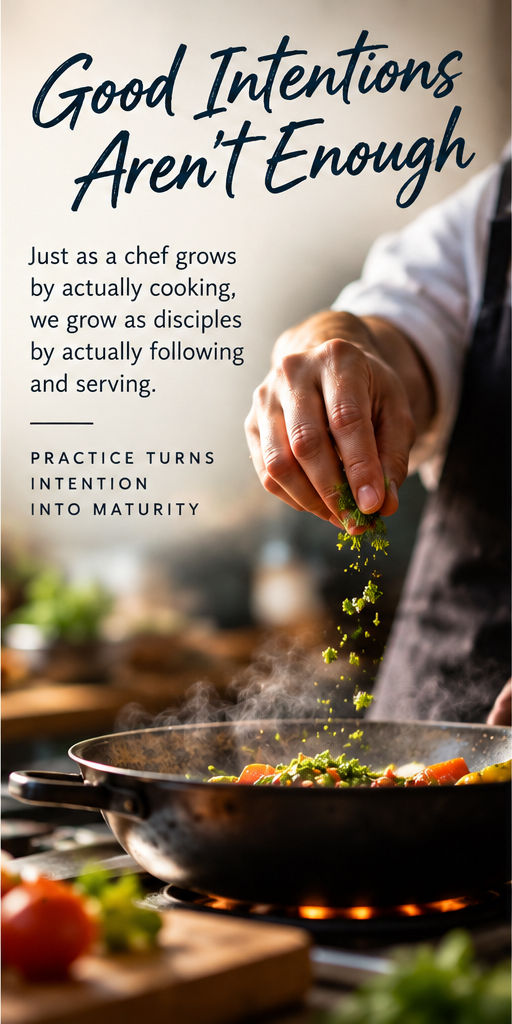
Think of someone who wants to become an excellent chef. Desire matters. Reading matters. Learning from others matters. Setting aside time, practising techniques and investing resources all matter. But ultimately the person has to cook.
It is in actually doing the work of a chef — even before they feel worthy of the title — that all the separate strands of learning begin to come together.
Without that practical activity, the books, conversations, intentions and plans can become little cul-de-sacs.
They have nowhere to develop, and eventually even good habits can falter and fade.
So the aspiring chef needs a kitchen. In the same way, our aspirations for spiritual growth need a practical setting — railway tracks, as it were, along which prayer, Scripture, obedience, sacrifice, relationships, gifts and resources can travel together.
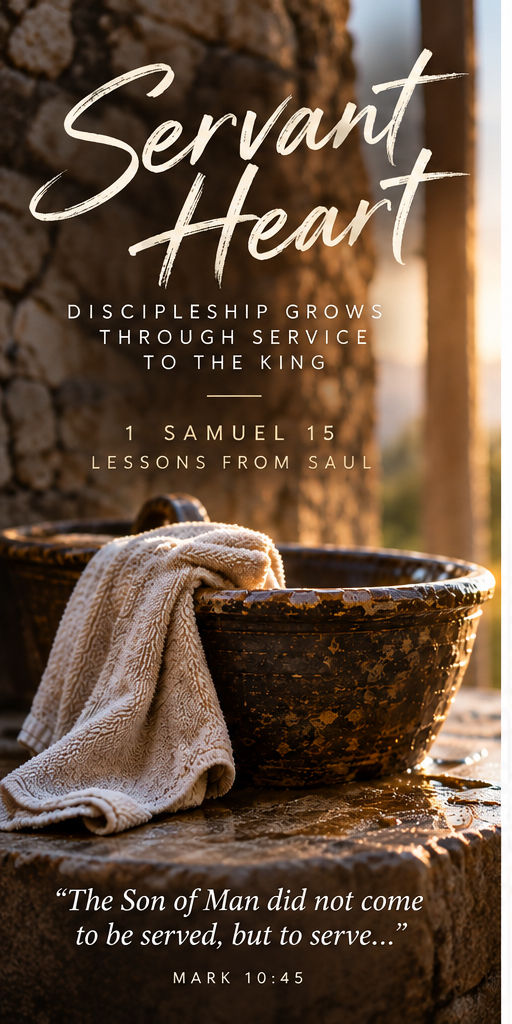
The Kingdom Context: Service to the King
In the Kingdom of God, that practical context is service to the King.
Servanthood can sound negative in our culture, and even Christians can underestimate its importance and power. Yet Jesus placed servanthood at the very heart of His Kingdom. The King Himself came as a servant. He is the Servant King.
Christian growth therefore cannot be separated from actually following, obeying and serving Christ. We do not merely prepare to become disciples; we practise discipleship. As we actively and intentionally serve the King, the other disciplines of Christian life begin to find their proper place and purpose.
Key thought: Spiritual growth needs somewhere to happen.
Servanthood provides the practical context in which our desire to grow becomes actual discipleship.
1 Samuel 15 — Lessons from Saul:
A servant does not decide for himself how he will serve the King.
1 Samuel 15 takes the theme a stage further. Saul is given a clear command by God (vv. 1–3). He acts, but he alters the command (vv. 7–9). When Samuel arrives, Saul can still say, “I have carried out the LORD’s instructions” (v. 13). Saul has been active, but activity is not the same thing as obedience.
Verse 12 adds a striking detail: Saul has set up a monument in his own honour. The servant should be concerned with the honour of the King, but Saul’s service is increasingly revolving around Saul.
Saul then gives a religious explanation for what he has done: the best animals were kept to sacrifice to the LORD. Samuel’s answer exposes the issue: “To obey is better than sacrifice” (v. 22). It is possible to do something that looks religious while avoiding the particular obedience God requires.
Eventually Saul admits another influence: “I was afraid of the men and so I gave in to them” (v. 24). His failure was therefore not simply about animals or sacrifices. It exposed questions of obedience, self-interest, reputation, fear of people and what it really means to be the servant of the King.
Goibg Deeper (Discussion Questions)
1. Where in the chapter does Saul begin to move from obedience into doing things his own way?
2. Saul says, “I have carried out the LORD’s instructions” (v. 13). How can we persuade ourselves that we are obeying God while actually obeying only the parts that suit us?
3. Saul gives a religious reason for keeping the best animals (vv. 15, 21). Can doing something apparently “for God” become a substitute for doing what God has actually asked of us? What might that look like today?
4. Saul erected a monument in his own honour (v. 12). What does this tell us about the difference between a servant heart and a desire for recognition?
5. Samuel says, “To obey is better than sacrifice” (v. 22). What is the difference between religious activity and obedient discipleship?
6. Saul admits, “I was afraid of the men and so I gave in to them” (v. 24). In what ways can fear of people hinder our obedience to Christ?
7. Think back to last week: prayer, Bible reading, changing habits and rearranging our priorities are important. How can actually serving Christ provide the setting in which these things begin to grow together?
8. Is there an area where I am preparing to be a disciple rather than actually practising discipleship?
9. Is there an area where I am effectively saying, “Lord, I will serve You — but on my terms”?
10. What is one concrete act of obedience or service that I can put into practice this week?
A final thought..
The question is not simply, Do I want to grow? but, Am I putting myself in a position where obedience to Christ requires me to grow?
Comments